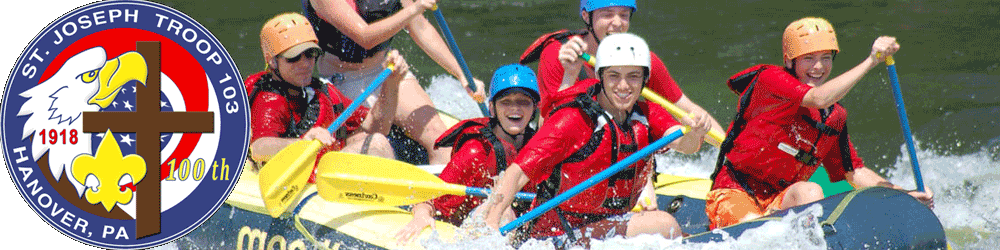
White Water Rafting
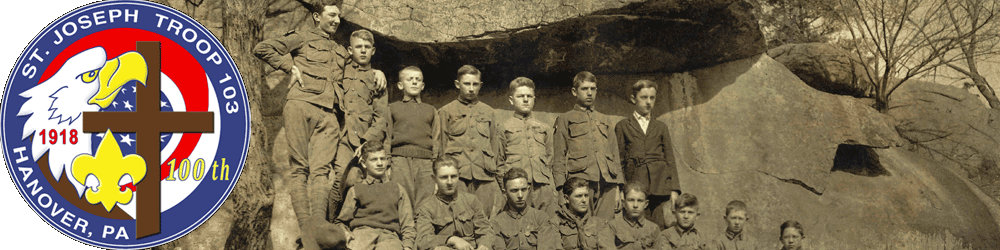
1919 - Devil's Den, Gettysburg
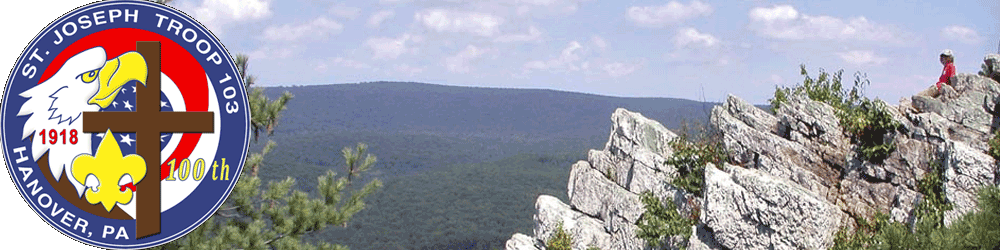
AT Vista - Pole Steeple
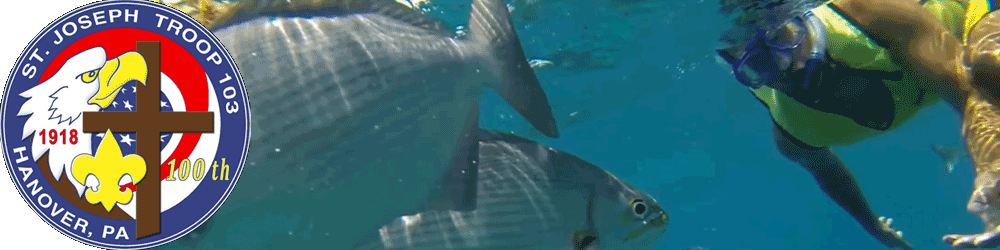
Underwater Exploration - Florida Keys
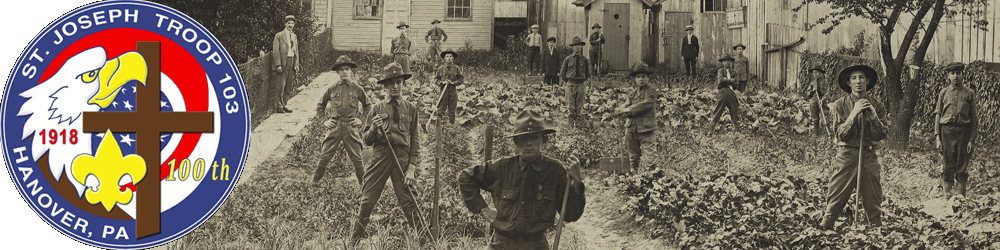
1918 - Troop's Victory Garden

Troop 103 - Sailing the Florida Keys
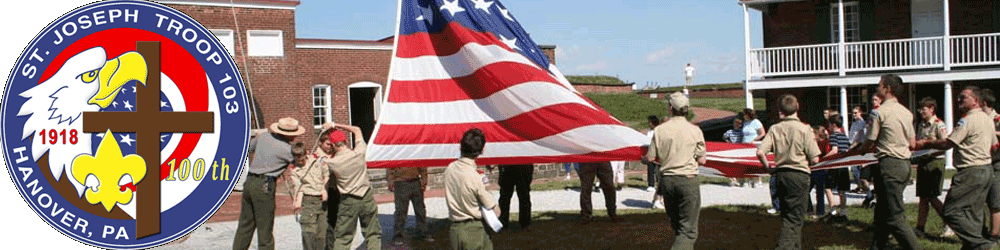
Retiring the Colors - Fort McHenry
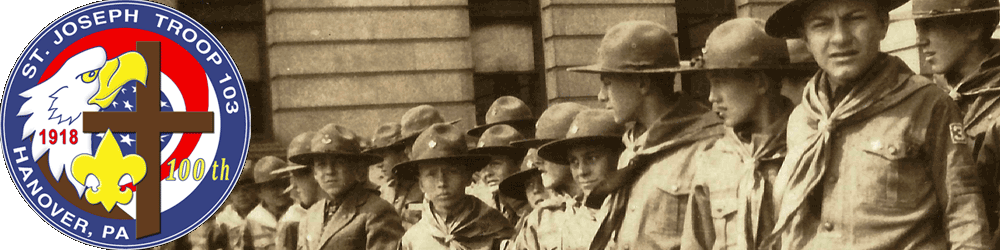
Troop 3 at the Capital
White Water Rafting

- May Sub & Sandwich Sale – 2026
 This is the last subs and sandwiche sale until the Fall. Sell to save for Summer Camp or other weekend events. Subs and Sandwiches are made fresh by R&K Subs. Please make checks payable to: St. Joseph Boy Scout Troop 103 Order and Money Due Date: Tuesday, May 12, 2026 Distribution Date: Tuesday, May 19,...
 - Klondike Derby – “Attack of the Snowmen” – 2/21/2026
 Troop 103 attended the Battlefield District Klondike to enjoy some fun stations to show off their scout skills, survival skills and teamwork! In this year’s Klondike Derby patrols will be defending themselves against the “Attack of the Snowmen!” The event was held at Camp Tuckahoe February 20-22,...
 - Troop 103 Celebrates Scout Sunday – 2/8/2026
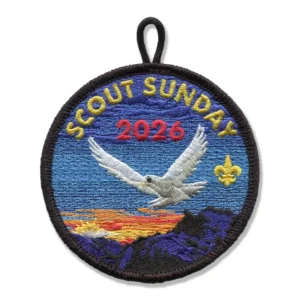 Scouting America allows chartered organizations to celebrate Scout Sunday on any day in February that best serves the chartering partner. Scouts from both the Troop and Pack attended the St. Joseph 10:00AM mass on February 8, 2026. We were also joined by a scout from Troop 84G of Littlestown. A few of the scouts were...
 - 2025 Hanover Memorial Day Parade
 Troop 103 was honored to carry the Allied Veterans Council Banner and our own Troop Banner at the Memorial Day...
 - Heritage Rail Trail/Spoutwood Farm —05/23/2025
 Please join us for a weekend of biking, camping and cooking at the Heritage Rail Trail/Spoutwood Farm in Glen Rock the weekend of May 23-25. On Saturday May 24th we’ll bike from Glen Rock to the Howard Tunnel & back (17 miles). Pull your bikes out of winter storage and bring them to the Troop...
 - Buck Ridge Trail Backpacking — 3/14/2025
 Troop 103 will be Camping out at the Pine Grove Furnace Camping ground and hiking from Kings Gap Education Center back to the Pine Grove Furnace area the weekend of March 14-16, 2025. Scouts will be satisfying Requirement #6 of the Eagle-required Cooking Merit Badge. Itinerary, Packing List and Permission Slip are linked below. Itinerary...
 - Troop 103 Scores Gold – Journey to Excellence Award for 2024
 Troop 103 has earned GOLD status again for the “2024 Scouting’s Journey to Excellence” Award. The award is the BSA’s council performance recognition program designed to encourage and reward success and measure the performance of our units, districts, and councils. It is meant to encourage excellence in providing a quality program at all levels of...
 - The 2025 Troop Calendar is now Available!
 Click here to see the latest Troop Calendar. The Troop Calendar highlights activities planned by the scouts and Troop Committee for the year. This includes: Troop meetings Overnight camping Day trips Fundraisers Adult training opportunities and...
 - Klondike Derby — 02/14/2025 – 02/16/2025
 The Battlefield District will host its 2025 Klondike Derby on February 15, 2024, at Camp Tuckahoe. This event is your opportunity to face the Seven Summits! You’ll face multiple challenges in your endeavor, but it’s nothing that a little planning cannot prepare you for. If you spend the time honing your skills, your Patrol will...
 - Climbnasium Outing: 01/24/2025
 BSA Troop 103 Scouts, Parents & Committee, We have a cabin booked for next weekend (Cobber Cabin in Gardners, PA) and reservations at Climbnasium in Mechanicsburg for Saturday from 9 am to noon. Details are attached. Please bring payment ($39) and signed Permission Slips to Tuesday’s Troop Meeting. Itinerary, Packing List and Troop Permission Slip...